Seven American Wastelands Getting a Second Life
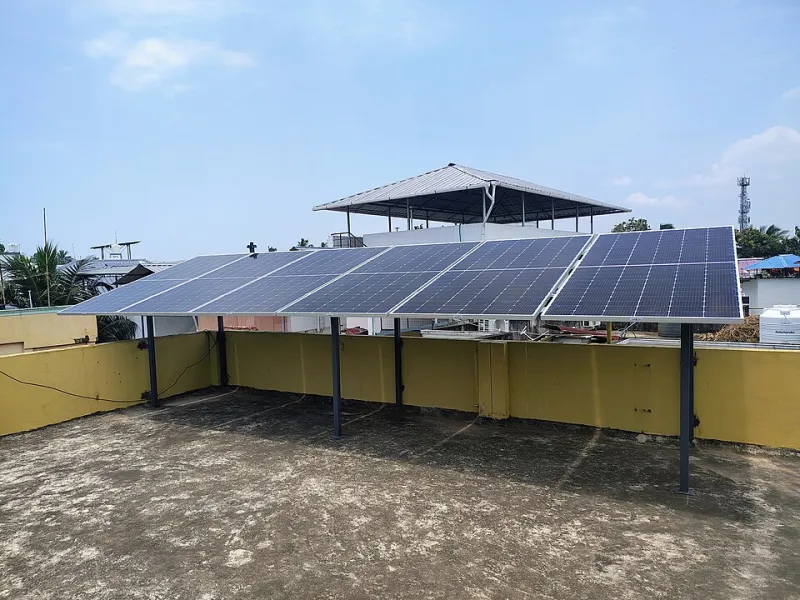
Photo: Manukrishnan80, CC BY-SA 3.0, via Wikimedia Commons
America's landscape carries the residue of a century of extraction and abandonment: mine scars, rail spurs, landfills, mill towns. Increasingly, communities are treating these parcels not as liabilities but as the cheapest developable land they own. Here are seven projects — each using a distinct reclamation method — and what they cost to build.
1. Appalachian Mine Lands to Solar Farms
Across coal country, flat benched mountaintops and stripped hillsides are being converted to utility-scale solar. In Kentucky and Virginia, organizations working under state reclamation programs have installed photovoltaic arrays on former surface mines, taking advantage of terrain that's already cleared, graded, and unreachable by floodwaters.
Method: Cap maintenance and geotechnical stabilization, followed by ballasted racking systems that minimize soil penetration. Cost: Solar development runs roughly $1 million per megawatt, but reclaimed sites save 10–20% versus greenfield construction because grading is already done. The lesson: Disturbed land is often better solar land — slope, sun exposure, and road access came with the mining.
2. Defunct Rail Corridors Become Greenways
The rails-to-trails movement remains the quiet giant of American land reclamation. Under the National Trails System Act's rail-banking provision, thousands of miles of abandoned corridor have been converted to multi-use trails — the Great Allegheny Passage from Pittsburgh to Cumberland being a marquee example.
Method: Rail-banking preserves the corridor for future transit while allowing immediate trail use; construction is largely resurfacing and bridge rehabilitation. Cost: Typically $200,000–$1 million per mile, a fraction of new trail construction. The lesson: Linear corridors connect towns, not just trailheads — the economic lift to trail-adjacent businesses often outpaces the build cost within a decade.
3. Freshkills, Staten Island: Landfill to Landscape
Once the largest landfill in the world, Freshkills on Staten Island is being transformed into a park three times the size of Central Park. Sections have opened to the public while gas collection systems capture methane for energy generation.
Method: A multi-layer landfill cap — soil, geomembrane, drainage, and topsoil — with passive and active gas vents. Cost: The multi-decade buildout is estimated in the billions, funded largely by New York City capital budgets. The lesson: Landfills can't support deep-rooted trees or structures, so design around the cap — and let the gas pay part of the maintenance bill.
4. The High Line's Rust Belt Cousins
New York's elevated park proved the model; now industrial cities are adapting it. In Chicago, Philadelphia, and smaller manufacturing towns, dormant freight spurs and viaducts are being converted to linear parks at neighborhood scale.
Method: Structural assessment, deck waterproofing, and shallow-rooted planting design. Cost: Modest community versions run $2–10 million, far below the High Line's budget. The lesson: You don't need Manhattan real estate values for elevated reuse to work — you need a structure worth saving and a maintenance plan.
5. Mill Town Riverfronts Reborn
In New England and the Carolinas, decommissioned textile and paper mill sites along rivers are being cleared, remediated, and converted to riverwalks, housing, and light industry. Towns like Biddeford, Maine, have turned shuttered mill complexes into mixed-use anchors.
Method: Brownfield assessment grants fund Phase I and II environmental site assessments; cleanup often uses state revolving loan funds. Cost: EPA brownfield grants typically range from $200,000 (assessment) to $500,000–$1 million (cleanup) per site. The lesson: Federal seed money is the on-ramp — assessment grants de-risk sites enough to attract private buyers.
6. Quarries Filled with Future
Abandoned stone and gravel quarries, often flooded and fenced, are finding roles as reservoirs, climbing parks, and wildlife habitat. Communities in the Midwest have converted quarry pits into stormwater retention basins that double as recreation areas.
Method: Hydrological modeling, bank grading, and controlled water management. Cost: Highly variable, but stormwater conversions frequently qualify for municipal infrastructure funding. The lesson: Pair reclamation with a problem the town already has — flood control, water supply, cooling — and the funding follows.
7. Strip Mines to Forests in the Ohio Valley
Reforestation of legacy strip-mine land in Ohio, West Virginia, and Pennsylvania — much of it under the federal Abandoned Mine Land program — is rebuilding Appalachian hardwood forest on spoil banks using the Forestry Reclamation Approach: loose-dumped spoil, direct planting of native hardwoods, and minimal soil compaction.
Method: Deep-ripping compacted mine spoil and planting containerized native seedlings. Cost: Reforestation runs roughly $1,000–$3,000 per acre, among the cheapest reclamation available. The lesson: Cheap per-acre interventions, multiplied across tens of thousands of acres, change regional ecology — and AML reauthorization funding makes it accessible to any affected state.
The Common Thread
Seven sites, seven methods, one pattern: the land was already public, already degraded, and already close to people. Reclamation succeeded where communities treated the scar as an asset with a problem, not a problem with no use. The federal and state funding channels — brownfield grants, AML funds, transportation alternates — exist in every state. The examples above suggest the constraint is rarely money or science. It's whether a community decides the empty, damaged ground in its midst deserves a future.