Fine Print on Filled Ground: What Homebuyers Learn — and When — About Landfill Housing
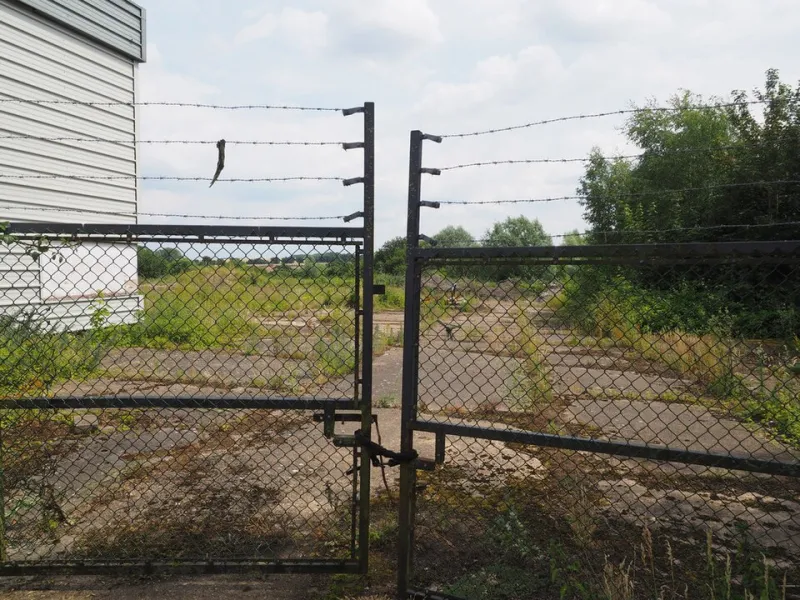
Photo: BFDhD, CC BY 3.0, via Wikimedia Commons
The disclosure packet ran to forty pages, and like most closing documents, it was skimmed rather than studied. Somewhere in the addenda, beneath the standard language about easements and homeowners association dues, was a reference to 'historical fill material.' The buyers — a young couple relocating from out of state — signed anyway. Only months later, when a neighbor mentioned methane monitoring wells at the edge of the cul-de-sac, did they understand what historical fill meant: their home sat on a closed municipal landfill.
Their experience is not rare. It is, in many respects, the design.
The Patchwork Nobody Explains
Real estate disclosure in the United States is governed by state law, and the states disagree — sometimes sharply — about what a seller must volunteer. A handful of jurisdictions require sellers to flag known environmental hazards or sites on federal or state contaminated-land registers. Many more rely on a buyer-beware framework for anything not immediately observable. And nearly everywhere, the obligations thin out dramatically when a property passes through an as-is sale, a foreclosure, or a corporate entity that claims no actual knowledge of site history.
Layered on top of this patchwork are liability shields that were, ironically, created to encourage reclamation. Federal and state brownfield programs offer prospective purchasers protection from cleanup liability, provided they conduct baseline environmental assessments. These protections have been genuinely effective at unlocking dormant parcels for housing and commerce. But the same statutes that protect the new owner from liability say nothing about what that owner — or a subsequent homebuyer — must be told. A developer can hold a liability protection letter in one hand and a glossy sales brochure in the other, with no legal requirement that the two documents ever meet.
The result is an information gap that widens with each transaction. By the time a finished home reaches an individual buyer, the chain of disclosure may have passed through a land bank, a redevelopment authority, a limited liability company, and a homebuilder — none of which is necessarily obliged to narrate the parcel's past.
Three Homeowners, Three Discoveries
Consider three composite cases drawn from the patterns advocates and attorneys describe repeatedly.
The first is the couple above, who learned of their landfill setting from a neighbor rather than a title company. Because the site was properly capped and monitored, their home posed no documented health risk — but the discovery still cost them. Their lender required additional documentation at refinance, and their resale conversations have grown complicated whenever a prospective buyer runs an environmental search.
The second case involves a renter, not a buyer, which illustrates an even thinner layer of protection. Lease agreements in most states carry no environmental disclosure duty at all beyond habitability standards. Tenants on reclaimed ground frequently learn of their location only when a monitoring crew arrives to service wells — assuming the wells are accessible rather than buried beneath landscaping.
The third case is the exception that proves the model: a buyer in a state with robust disclosure rules received a full environmental conditions packet before signing, including the cap's maintenance requirements and the homeowners association's obligation to fund long-term monitoring. She bought anyway. The difference, she says, was that she bought with her eyes open — and she now serves on the association committee that reviews the annual monitoring reports.
Transparency as Stewardship
The argument for fuller disclosure is usually framed as consumer protection, and it is. But on reclaimed land, transparency serves a second function that consumer framing misses: stewardship depends on informed occupants.
A landfill cap is not a one-time fix. It requires vegetation management, drainage maintenance, and periodic inspection — responsibilities that, in residential conversions, often fall to homeowner associations or individual lot owners who may not know they have them. A buyer who understands that the swale behind the garage is an engineered drainage feature, not a landscaping afterthought, is a buyer who will not pave over it. A renter who knows what a monitoring well is will not report it as a hazard, or worse, tamper with it.
Silence, by contrast, does not merely risk ignorance. It breeds distrust. When homeowners discover their land's history after the fact, the discovery tends to generate suspicion disproportionate to the actual risk — precisely because they were never given the chance to evaluate it. Communities that were told the truth up front, environmental psychologists and community organizers alike observe, tend to become the most vigilant caretakers of the engineered systems beneath their feet.
What Reform Could Look Like
Several reforms are within reach of state legislatures and, in some cases, local governments.
Mandatory disclosure at the point of sale, tied to state contaminated-site databases, would close the most obvious gap. Recording requirements — placing a notice of engineered fill or monitoring obligations in the property's chain of title — would ensure the information survives resale. Municipalities that approve landfill conversions could require developers to provide plain-language occupant education as a condition of zoning approval, a practice a handful of jurisdictions have already adopted. And extending even basic disclosure duties to landlords would bring renters into the circle of informed stewardship.
None of these measures would make reclaimed land less buildable. If anything, honest labeling would strengthen the market for well-executed conversions by distinguishing them from careless ones.
The couple on the cul-de-sac, for their part, have made peace with their ground. They mow around the monitoring well, read the annual reports, and keep a folder of documents they wish they had received a year earlier. Their lot, they note, is safe, engineered, and monitored. The failure was never in the land. It was in the silence surrounding it — a silence that disclosure reform could end without moving a single shovelful of soil.