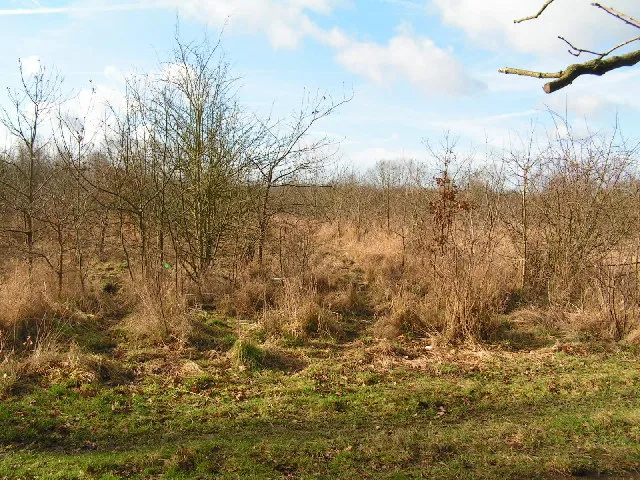
Letting the Water Win: Inside America's Quiet Decision to Flood Old Ground

Photo by Photo by thundermannie mannie on Unsplash on Unsplash
For most of the twentieth century, the measure of good land management was simple: keep the water out. Farmers tiled their fields, municipalities channeled their creeks, and mill towns drained the ponds their own industries had created. In places like the Black Swamp of northwest Ohio or the drained bottomlands of the Mississippi floodplain, dry ground was progress, and progress was measured in acres reclaimed from the wet.
That logic is now running in reverse. From rural Minnesota to the old textile corridors of New England, communities are deliberately breaching berms, plugging drainage ditches, and letting water return to land their great-grandparents worked a lifetime to dry. It is not abandonment. It is engineering — and increasingly, it is policy.
Why the Drains Are Coming Out
The motivations vary by region, but they tend to cluster around three pressures. First, flooding itself: towns built on filled wetlands along rivers like the Cedar, the Wabash, and the pass through communities in Wisconsin and Iowa have discovered that the water they once channeled away has to go somewhere, and increasingly it goes through someone's basement. Restored wetlands upstream act as sponges, absorbing storm surges that pavement and drain tile once accelerated.
Second, water quality. Tile-drained agricultural land delivers nitrate loads directly into tributaries feeding the Gulf of Mexico. In Iowa, Illinois, and Minnesota, conservation districts are paying to convert marginal field edges into wetlands precisely because a two-acre marsh can strip nitrogen from runoff far more cheaply than any treatment plant.
Third, the industrial legacy itself. Former mill ponds — many built in the 1700s and 1800s to power textile and grain mills — accumulated decades of sediment behind their dams. When those dams aged out, towns faced a choice: expensive removal and disposal, or a managed re-flooding that contains the sediment in place. Some communities, particularly in Massachusetts and Rhode Island, are choosing the latter, turning a liability into a pond.
The Engineering of Surrender
Calling this process "letting nature take its course" undersells the work involved. A deliberate re-flooding requires hydrological modeling to predict where the water table will settle, soil testing to understand what a century of drainage and farming left behind, and careful grading so that the new wetland holds water at the right depth across the seasons.
Engineers talk about "designing the failure" — choosing in advance where the water will go, rather than letting an uncontrolled breach decide. In practice, that means engineered spillways instead of crumbling earthen dams, native seeding plans instead of whatever volunteer vegetation arrives first, and monitoring wells to track whether contaminants locked in old sediments stay put.
The ecological payoff can be fast. Restored wetlands in the Prairie Pothole region have seen breeding waterfowl return within a few seasons. In the Northeast, breached mill ponds have become stopover habitat for migratory birds along the Atlantic flyway — on ground that, within living memory, was a dry field or a parking lot.
The Politics of Getting Wet Again
The harder work is social. Land that families farmed for four or five generations carries a meaning that no ecosystem-services valuation fully captures. Asking a landowner to flood a field — even compensated, even voluntarily — can feel like asking them to undo the family's legacy.
Local politics reflect that tension. County boards that once subsidized drainage districts now debate whether to fund their partial decommissioning. Neighbors who welcomed a flood-control reservoir upstream sometimes object when the wetland that provides it changes the view, the mosquitoes, or the assessed value of adjacent parcels. In several Midwestern counties, the deciding vote has come down to whether residents trust that the water will stay where the engineers say it will.
What has changed is the arithmetic. Federal disaster payouts, crop insurance claims on repeatedly flooded ground, and the rising cost of maintaining aging drainage infrastructure have made the status quo expensive. When a drainage district's assessment rolls exceed the value of the land it protects, re-flooding stops sounding radical and starts sounding fiscal.
What Managed Retreat Says About Reclaimed Ground
The deeper story is philosophical. American land reclamation has long been a one-way valve: wet to dry, wild to productive. The communities now re-flooding their ground are testing whether the valve can swing both ways — whether a town can reclaim land from its own reclamation.
There is humility in that, but also pragmatism. Nobody is proposing to undo the drainage of the Midwest's most productive farmland. The wetlands coming back are on the margins: flood-prone bottom acres, sediment-choked pond beds, fields too wet to plant in three years out of five. It is a targeted retreat, not a general one.
For the site's readers, the lesson may be the most important one in the reclamation field: restored land is never finished. The ponds being dug today are the drained fields of a future generation, and the drained fields of the past were once wetlands. Reclamation, done honestly, is a conversation with the water — and the water, as more towns are learning, has a longer memory than we do.