Cultures in a Jar: The Gardeners Trading Microbes to Bring Dead City Soil Back to Life
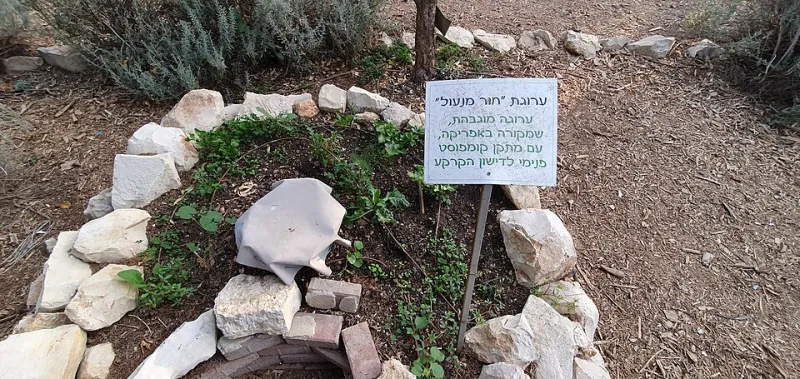
Photo: Korenn, CC BY-SA 4.0, via Wikimedia Commons
In a shed behind the Willow Street community garden in Providence, Rhode Island, sits a shelf of mason jars that look, at first glance, like a sourdough starter collection. They are not. Each jar holds a slurry of compost, forest duff, and uncooked rice — a growth medium for arbuscular mycorrhizal fungi harvested from a healthy woodland two counties away. Gardeners here call it "starting a culture," and the practice is spreading through community garden networks with the speed of a heirloom tomato seed swap.
The idea is deceptively simple: degraded urban lots — former gas stations, demolished row houses, parking pads — often lack not just nutrients but the living microbial community that makes soil function. Rather than waiting for biology to recolonize on its own, gardeners are importing it, trading inoculants the way bakers trade starters. But whether this DIY enthusiasm complements or circumvents formal remediation standards is a question the movement is only beginning to confront.
Three Plots, Three Climates, One Hypothesis
Consider three gardens separated by thousands of miles. In Providence, the Willow Street collective inoculates raised beds with fungal slurries after capping lead-contaminated soil with clean fill — inoculation as a second step, not a substitute. In Phoenix, the Desert Roots plot on a former gravel yard relies on drought-adapted bacterial cultures sourced from Sonoran Desert washes, betting that microbes evolved for aridity will outperform generic compost tea in 115-degree summers. And in Minneapolis's Cedar Riverside neighborhood, gardeners working a compacted former bus depot lot have partnered with a University of Minnesota soil lab to test whether their homemade inoculants measurably improve plant uptake of heavy metals.
The Minneapolis collaboration is the exception. Most microbial swapping happens without any testing at all — which is precisely what makes soil scientists both intrigued and uneasy.
What the Science Actually Supports
Dr. Elena Vasquez, a soil microbiologist who studies urban rhizospheres, is careful to separate evidence from enthusiasm. "Mycorrhizal fungi genuinely do improve phosphorus uptake, drought tolerance, and soil aggregation. That's well established," she says. "What's not established is whether a jar of slurry made in someone's shed establishes viable colonies in a compacted, contaminated urban substrate. Colonization failure rates in field conditions can be very high."
Compost tea, the movement's most popular product, draws sharper skepticism. Controlled studies have repeatedly found that aerated compost tea offers, at best, modest nutrient benefits — and can introduce pathogens if brewed carelessly. "There's a lot of folklore," Vasquez says. "People describe microbes like they're a personality. They're not magic. They're organisms with specific requirements."
Where researchers see real promise is in mycoremediation and phytostimulation — pairing fungal or bacterial inoculants with plants selected to degrade specific contaminants, such as petroleum hydrocarbons. Several EPA-validated pilot projects have used engineered or carefully selected microbial communities on former industrial parcels. The distinction, researchers stress, is that those projects involve contaminant identification, baseline testing, and monitoring. Most garden-scale inoculation involves none of the three.
The Danger of Skipping the Test
That gap is where the movement's enthusiasm runs into risk. Inoculating soil that hasn't been tested for lead, arsenic, or PAHs does nothing to remove those contaminants — and may, in the case of certain practices, increase their mobility. Some fungal compounds can bind heavy metals in place; others, depending on soil chemistry, can theoretically mobilize them toward plant roots. Without testing, gardeners can't know which dynamic they're encouraging.
"The best thing the sourdough-soil crowd does," says Marcus Idowu, an environmental health advocate in Cleveland, "is get people paying attention to their dirt. The worst thing they could do is convince a neighbor that a jar of fungus makes testing unnecessary." Idowu points residents toward state extension programs and low-cost testing before any amendment — biological or otherwise.
A Complement, Not a Shortcut
The most responsible practitioners frame inoculation the way Willow Street does: as stage two of a sequence that begins with testing and, where needed, clean fill or capping. Biology accelerates recovery on land that has already been made physically safe. It does not replace removal, containment, or institutional controls.
There is also a quieter civic argument for the movement. Formal remediation is slow, expensive, and unevenly distributed — and, as this site has documented before, plenty of contaminated parcels fall outside any cleanup program's budget or jurisdiction. Citizens who rebuild soil biology themselves, with testing and reasonable precautions, are practicing a form of stewardship that formal systems often fail to deliver at the neighborhood scale.
The jars on the Providence shelf will not detoxify a Superfund site. But paired with a soil test, a raised bed, and a little patience, they may help a once-dead lot do what reclamation has always promised: come back to life.