Under the Lights, Over the Leachate: How Stadiums Ended Up on America's Worst Land
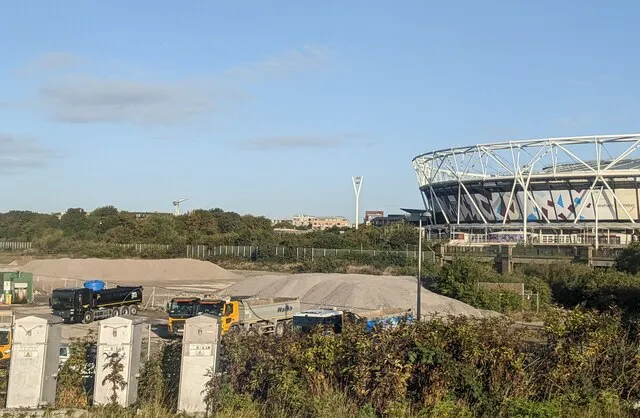
Photo: Roy Hughes , CC BY-SA 2.0, via Wikimedia Commons
When fans stream into a new stadium on a fall Saturday, few of them consider what sits beneath the concrete concourse. Increasingly, the answer is decades of industrial residue: petroleum hydrocarbons, heavy metals, solvents that migrated through soil for generations before the parking lots were striped.
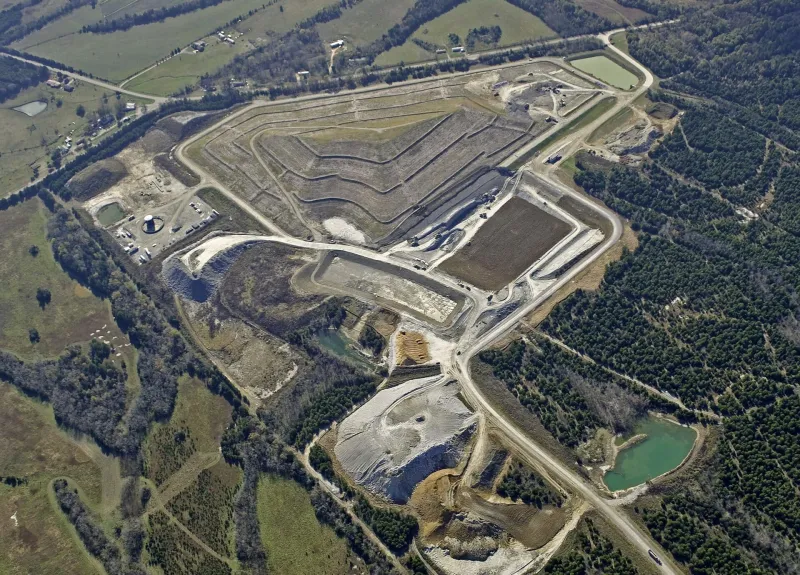
Across the United States, sports franchises and municipal governments have discovered a quiet alignment of interests. Teams want large parcels near downtown; cities want catalytic development on land nobody else will touch. Former foundries, gasworks, and rail corridors — parcels that sat fallow on state hazard registries for years — suddenly acquire value when a half-billion-dollar venue becomes the anchor tenant.
The Engineering Nobody Cheers For
Consider the arc of a recent Midwestern project: a soccer-specific venue sited on a parcel once occupied by a metals fabricator. Before a single pile was driven, consultants drilled more than two hundred borings, mapping contaminant plumes in three dimensions. The remedy that followed was neither glamorous nor optional.
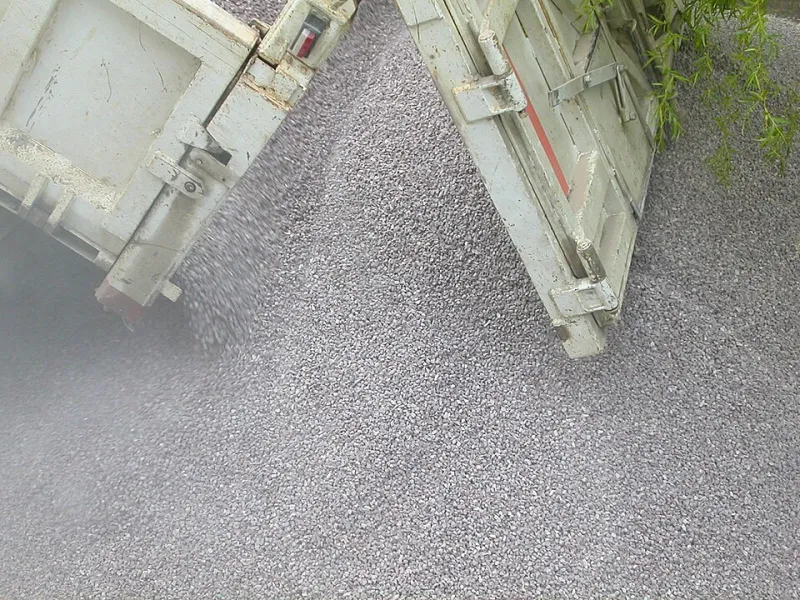
Engineers installed a engineered cap system beneath the building footprint — a layered assembly of geosynthetic fabric, low-permeability soil, and clean fill — designed to sever any pathway between buried contamination and the surface. Vapor barriers were welded beneath slabs. Stormwater, the great mobilizer of pollutants, was routed through lined basins rather than allowed to percolate into historic fill. Some of the most heavily impacted material never left the site at all; it was encapsulated in place, a decision that saved millions in disposal costs and countless truck trips through residential neighborhoods.
This is the standard playbook, and it works — but only under specific conditions.
The Fine Print Outlives the Lease
Here is what rarely makes the press release: a remediated stadium is not a finished project. Institutional controls, recorded on the property deed, obligate the owner to maintain the cap, restrict excavation into buried materials, and submit to periodic inspection by the state environmental agency. Groundwater wells must be sampled on a schedule. Any future renovation — a new scoreboard footing, an expanded concourse — triggers review to ensure the barrier system stays intact.
These obligations can run for decades, and they attach to the land, not the team. If the franchise relocates and the venue is demolished, the responsibility for the cap transfers to whoever holds the parcel next. Cities that negotiated eagerly for the stadium sometimes inherit, in the fine print, a maintenance liability they did not fully price.
Do the Benefits Reach the Neighborhood?
Advocates point to real gains. Land that generated no taxes and posed a latent exposure risk becomes a destination drawing thousands of visitors. Adjacent parcels appreciate. Some projects have channeled negotiated community benefits agreements into local hiring funds and park improvements.
Skeptics counter that the arithmetic is thinner than it appears. Stadiums operate on a limited number of event days; surrounding businesses do not always capture the foot traffic. And the question of who bears residual risk — the school two blocks from the capped plume, the residents whose wells once drew from the same aquifer — is rarely resolved by a ribbon-cutting.
The honest answer is that these deals deliver both. They transform liability into activity, and they do so on terms that demand permanent vigilance. What separates a good project from a bad one is usually not the engineering, which is well understood, but the governance: whether the monitoring covenants are funded, enforced, and disclosed to the people living in the shadow of the light towers.
The dirt beneath the field can be trusted — as long as somebody keeps checking on it.