Roots at Work: Five Plants That Pull Toxins Out of American Soil
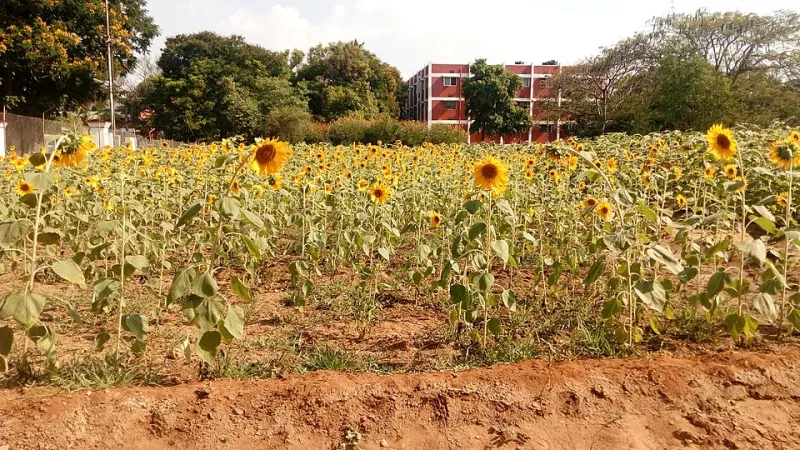
Photo: Aneesfathima.agri, CC BY-SA 4.0, via Wikimedia Commons
Not every contaminated site needs a fleet of dump trucks. In a growing number of American restoration projects, the heavy lifting is done by roots — a slow, solar-powered approach known as phytoremediation, in which plants extract, stabilize, or break down pollutants in soil and groundwater.
The appeal is obvious: planting is a fraction of the cost of dig-and-haul remediation, it leaves soil structure intact, and it converts a hazard into a green space residents can watch recover. The caveats are just as important. Plants work slowly, they work shallowly, and they fail when contamination runs too deep or too concentrated. With that honesty in mind, here are five species earning their place in restoration plans across the country.
1. Sunflowers: The Lead and Cesium Sentinel
Sunflowers became famous after plantings at Chernobyl and Fukushima, but their American track record is substantial too. Their fast growth and tolerance for poor soils make them useful for pulling lead and certain radionuclides from surface soils.
What they remove: Lead, cesium-137, and some heavy metals, concentrated in plant tissue. Realistic timeline: Multiple growing seasons, with harvested plants requiring disposal as contaminated biomass. Where it's been tried: Demonstration plots in Detroit and post-industrial lots in the Rust Belt, often as community-led interims on vacant parcels.
The honest limitation: sunflowers access only the top foot or so of soil, and lead removal is often modest relative to total contamination. Their greatest value may be diagnostic — a visible, cheap way to test whether a site warrants costlier intervention.
2. Willows: The Groundwater Pump
Willows drink enormous volumes of water, and whatever is dissolved in that water comes with it. This makes them effective at containing plumes of contaminated groundwater and taking up metals and petroleum byproducts along riparian corridors.
What they remove: Heavy metals, petroleum hydrocarbons, and solvents from shallow groundwater. Realistic timeline: Five to fifteen years for measurable plume reduction. Where it's been tried: Fuel-spill sites in the Northeast and streamside buffers in former coal regions of Pennsylvania and West Virginia.
Willows are containment specialists more than eliminators — they hold contamination in place and reduce migration while slower processes degrade it.
3. Hybrid Poplars: The Deep-Rooted Workhorse
Poplar hybrids can root more than ten feet deep, reaching contamination most plants can't touch. They've become the default tree for phytoremediation pilots across the Midwest and Pacific Northwest.
What they remove: Chlorinated solvents like TCE, petroleum compounds, and nitrates, through uptake and breakdown in root and leaf tissue. Realistic timeline: Ten years or more, though stands begin functioning within a few seasons. Where it's been tried: Landfill perimeters in Oregon, solvent-plume sites in Iowa, and former fuel depots throughout the Great Lakes region.
Their weakness is seasonal dormancy — uptake stalls each winter — and they need irrigation in arid climates.
4. Indian Mustard: The Metal Accumulator
A cousin of garden brassicas, Indian mustard accumulates unusual concentrations of lead, cadmium, and zinc in its shoots. It has anchored numerous field trials on contaminated agricultural land in California and the mid-Atlantic.
What it removes: Lead, cadmium, chromium, and zinc. Realistic timeline: Years to decades for meaningful reduction; often paired with soil amendments that make metals bioavailable for uptake. Where it's been tried: Trial plots near former smelters in Oklahoma and urban garden initiatives addressing lead in residential soil.
The catch is what happens after harvest: contaminated biomass must be landfilled or incinerated, adding cost and logistics that pilot projects sometimes understate.
5. Prairie Grasses: Stabilizers, Not Extractors
Switchgrass, big bluestem, and their native companions work differently. Rather than removing contaminants, their dense root systems bind soil, slow leaching, and support microbial communities that break down petroleum compounds.
What they address: Petroleum hydrocarbons, erosion on mine tailings, and metals through immobilization. Realistic timeline: Establishment within two to three seasons; degradation of hydrocarbons over five to ten years. Where they've been tried: Reclaimed strip mines in Illinois and Indiana, pipeline corridors across the Great Plains, and brownfield caps throughout the Midwest.
Their durability in harsh conditions makes them the backbone of most large-scale revegetation, even if they never advertise their chemistry.
What Plants Cannot Fix
Enthusiasm for phytoremediation occasionally outruns its limits. No plant meaningfully removes lead from deep soil on a human timescale. Heavily contaminated industrial sites generally require conventional cleanup first, with plants serving as a polishing step or long-term steward. And harvested biomass creates a disposal stream that must be managed.
Used honestly, though, phytoremediation is a genuine tool — one that lets communities begin restoring land they could never afford to excavate. On sites waiting decades for full remediation, a field of sunflowers is not a solution. It is a start.