Shovels Before Permits: Neighborhood Teams Rebuilding Their Soil From the Ground Up
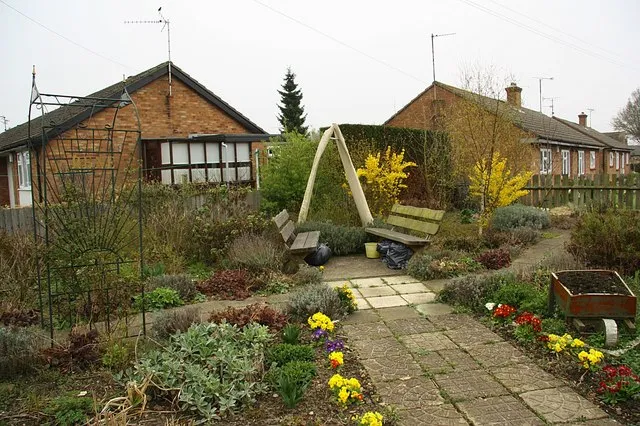
Photo: Richard Croft, CC BY-SA 2.0, via Wikimedia Commons
There is a particular kind of patience required to garden in a city, and a different, harder kind required to garden in a city where you suspect the soil. Lead from peeling paint and demolished structures. Arsenic and PAHs from industrial neighbors long gone. Polycyclic everything, seeping through decades of fill dirt hauled in to level a lot nobody wanted. Across the United States, thousands of community gardens, schoolyards, and backyard plots sit on soil with a history.
For a long time, the standard advice was to wait: file a complaint, request testing, wait for a government program to reach your neighborhood. Some neighborhoods are done waiting. In Detroit, where an estimated 90,000+ vacant parcels carry the residue of a century of industry, groups like Keep Growing Detroit have built testing and raised-bed programs into the fabric of urban agriculture. In Chicago, community organizations have mapped soil lead concentrations block by block. On the Navajo Nation, where legacy uranium mining left contamination spanning hundreds of miles, tribal environmental programs and community health workers have led education and remediation efforts that federal agencies are only beginning to match.
What unites these efforts is a simple premise: restoration is not something done to a community. It is something a community can do.
Step One: Know What You're Standing On
Every sound project begins with history and testing, in that order. Before spending a dollar, assemble the site's biography. Sanborn fire insurance maps (many libraries provide free access), city property records, and state environmental agency databases can reveal former gas stations, smelters, dry cleaners, or fill operations. A lot that hosted an auto body shop for forty years tells you what to test for.
Then test. A basic heavy-metals screen through a university extension service or a mail-in lab typically runs $30–$100 per sample. For lead, the thresholds that matter for gardening are roughly 400 ppm (the EPA's residential play area standard) and lower still for root vegetables. Sample multiple spots, at the depth where roots will actually grow — usually the top six inches, where contamination concentrates.
Step Two: Match the Treatment to the Threat
Not every contaminated lot needs excavation. Community groups have a toolkit:
- Raised beds with clean imported soil and a landscape-fabric barrier. The workhorse of urban gardening. It does not remove contamination; it separates people and food from it. Cheap, fast, reversible.
- Phytoremediation. Certain plants extract or stabilize contaminants — sunflowers and Indian mustard for lead and other metals, willows and poplars for deeper contamination, grasses and compost-amended plantings to bind metals in place. Be clear-eyed: phytoextraction is slow, measured in growing seasons, and harvested plants become contaminated biomass that must be disposed of properly. It works best as stabilization and demonstration, not a quick fix.
- Soil amendment and capping. Compost, biochar, and phosphate amendments can reduce the bioavailability of lead and other metals. A thick cap of mulch or clean soil, kept planted, prevents dust and direct contact — often the biggest immediate risk.
- Removal. For severe hotspots, particularly around children's play areas, excavation and off-site disposal may be the only defensible option. This is where partnerships with municipal brownfield programs or EPA's Targeted Brownfields Assessments can matter.
Step Three: Find the Money and the Allies
Small restorations are fundable. EPA Environmental Justice grants, state healthy-soil programs (California's has funded community-scale projects), community foundation micro-grants, and crowdfunding have all financed neighborhood remediation. University extension offices frequently provide testing support and technical advice at little or no cost — and a partnership with a local agronomy department lends credibility that helps with grant applications.
Two cautions. First, document everything: chain of custody for samples, disposal receipts for contaminated biomass, before-and-after photos. Second, know your limits. Soil with industrial-level contamination, solvents, or unknown drums is not a volunteer project. Community-led does not mean unadvised.
The Long Game
A lot in East Cleveland or West Dallas will not be decontaminated in a summer. But a raised bed built this spring feeds a family this fall, and a sunflower stand pulling metals from a corner lot is also a visible, physical argument that this ground belongs to the people who live on it. Restoration, at the neighborhood scale, starts as a gardening project and becomes something closer to civic self-determination — one tested, amended, replanted yard at a time.