Strangers to the Land: How Fuzzy Property Rights Keep Thousands of Mine Sites Poisoned
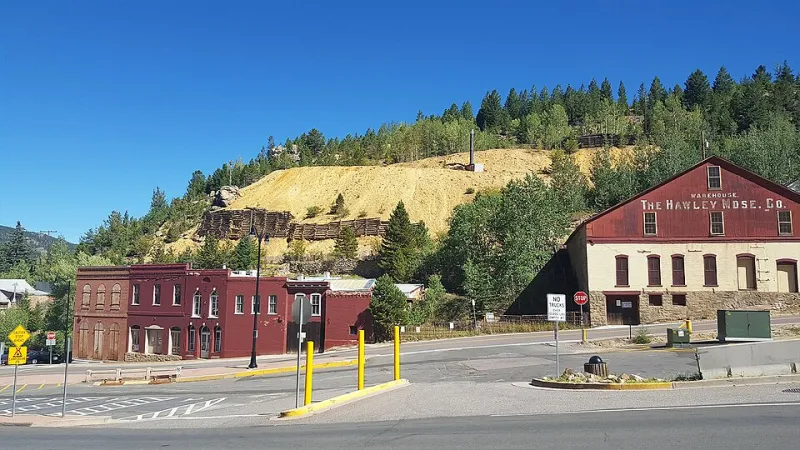
Photo: D&RG Railfan, CC BY 3.0, via Wikimedia Commons
The tailings pile above the old Alpha Lode claim looks unremarkable from the county road — a pale scar of crushed rock bleeding orange into a creek that eventually feeds a municipal watershed. What is remarkable is that no legal entity in Colorado is clearly obligated to clean it up. Not the state. Not the county. Not the defunct mining company whose letterhead still appears on a 1911 deed. Not the retired schoolteacher in Denver who inherited a fractional interest in the parcel and learned of its existence only when a title search turned it up.
Scenes like this repeat across the West with a frequency that borders on the absurd. Federal inventories suggest more than 100,000 abandoned hardrock mine features nationwide, the majority on public or mixed-ownership land in Arizona, Colorado, Montana, Nevada, and New Mexico. A meaningful share of these sites leak acid mine drainage, heavy metals, or sediment into waterways. Most are not on any cleanup schedule. The obstacle, more often than not, is not engineering or even money. It is ownership.
A Patchwork Quilt of Liability
American mining law is layered like the ore bodies it once chased. The General Mining Law of 1872 granted claims under federal patent systems that have since been restricted, repealed in places, and complicated by state water rights, severed mineral estates, and generations of inheritance without probate. A single forty-acre parcel might hold surface rights held by a rancher, mineral rights severed and sold in 1953, a valid claim staked by a hobbyist prospector, and an environmental covenant recorded by a long-gone corporation.
This patchwork collides with the liability structure of federal cleanup law. Under CERCLA — the statute behind Superfund — anyone who owned or operated a contaminated site, or arranged for disposal of hazardous substances there, can be held responsible for cleanup costs, jointly and severally. Good Samaritans who volunteer to restore a site they do not own risk inheriting that liability. The predictable result: everyone with the capacity to act declines to act, because acting looks legally riskier than waiting.
One Creek, Eleven Years, No Shovel in the Ground
Consider the arc of the Alpha Lode site. County health officials documented elevated zinc and cadmium in the receiving stream in 2013. The state's abandoned mine program identified a feasible remedy — regrading the tailings, capping them, and stabilizing the creek bank — at an estimated cost of $1.4 million.
Then came the title work. The surface estate traced to an estate that was never probated, with heirs scattered across three states. Two of the twelve fractional mineral interest holders could not be located. Because the remedy would disturb contaminated material, legal counsel flagged potential CERCLA exposure for any party performing the work. The state, lacking a willing owner to sign access agreements and lacking statutory immunity for Good Samaritan reclamation, shelved the project. It has been 'pending landowner coordination' for over a decade. The creek has not waited.
What Reform Could Unlock
The frustrating part is that the policy tools are well understood. The proposed Good Samaritan Remediation of Abandoned Hardrock Mines Act, which has circulated through Congress in various forms for years, would shield qualified third parties — nonprofits, watershed groups, state agencies — from CERCLA liability at truly orphaned sites, provided they do not cause new contamination. Pilot versions of this concept have moved projects forward in states like Montana and Colorado.
State-level fixes matter too. Colorado's Volunteer Cleanup Program and Montana's similar framework let volunteers perform reclamation with state oversight and reduced liability. Expanding state reclamation funds, funded by severance taxes or federal grants through the Bipartisan Infrastructure Law, gives agencies money to act even when owners cannot be found. Streamlining quiet-title procedures for abandoned parcels — a dull-sounding reform with outsized consequences — would shrink the universe of sites stuck in limbo.
The Ground Beneath the Paperwork
None of this means property rights should be trampled. It means the current system rewards absence: the less anyone claims responsibility, the less anyone can be blamed. That inversion is a policy choice, and it can be unmade.
Downstream of the Alpha Lode, a watershed group has spent years collecting water-quality data on its own dime, building the record that will one day justify cleanup. They are, in effect, doing the science while the law catches up. Until Congress and the states align liability with actual fault, that division of labor — volunteers documenting, lawyers deliberating, creeks degrading — will remain the West's most stubborn reclamation project: the restoration of our willingness to be responsible for land we all quietly benefit from.