Where Does Clean Fill Really Come From? Tracing the Soil Trade's Murky Supply Chain
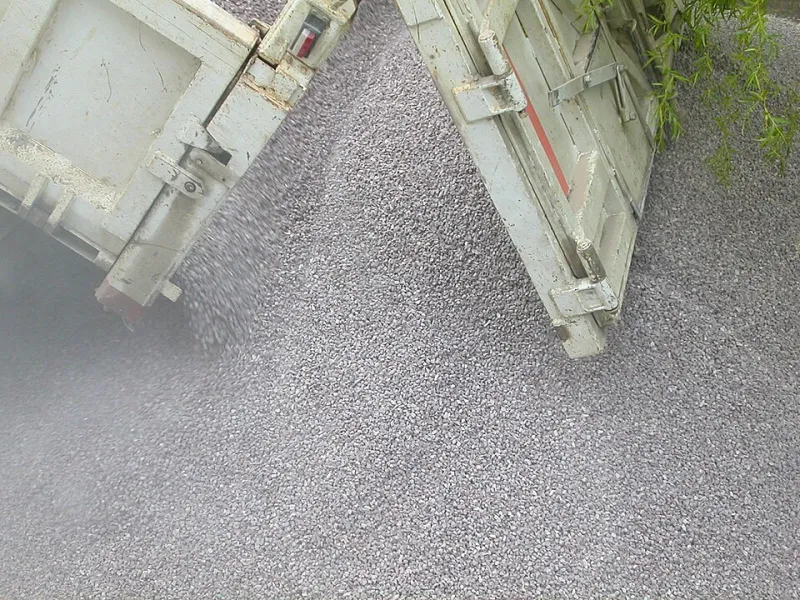
Photo: Syced, CC0, via Wikimedia Commons
A Commodity Hiding in Plain Sight
Topsoil is the least glamorous substance in America, and one of the most valuable. The uppermost layer of soil — the dark, biologically active band that took millennia to form — underwrites the nation's agriculture, its stormwater absorption, and every suburban lawn laid down after a subdivision's bulldozers depart. Yet the market that moves it operates with less transparency than the trade in scrap metal.
Consider the scale. A single large construction project can strip tens of thousands of cubic yards of topsoil before foundations are poured. Some of that soil is reused on site. Much of it enters a regional brokerage network, sold through middlemen to grading contractors, landfill operators, and landscaping suppliers. Prices vary wildly by metro area — premium screened loam can fetch $25 to $50 per cubic yard delivered in the Northeast, while in parts of the Midwest the same material trades for a fraction of that. For an industry moving material by the truckload, the margins are real, and so is the incentive to cut corners.
The Paper Trail Problem
The core vulnerability of the fill market is simple: dirt is difficult to identify. Unlike a barrel of chemicals or a load of construction debris, a truckload of soil carries no manifest requirement in most states. A handful of jurisdictions — Massachusetts with its transmittal forms for fill, Washington with its emphasis on source documentation for imported topsoil — have built partial tracking systems. Most states have not.
The consequences surface in Environmental Protection Agency databases and state contamination site lists with uncomfortable regularity. Fill delivered to residential lots, school grounds, and public works projects has repeatedly been found to contain petroleum residues, lead, arsenic, and in notorious cases, materials traced back to industrial sites that were never properly characterized. Investigations in several states have documented fill brokers operating with no environmental testing whatsoever, relying instead on the assurances of whoever sold them the material. The phrase "clean fill," in practice, often means only that someone called it clean.
Regulators acknowledge the gap but rarely close it. State environmental agencies tend to regulate what leaves a contaminated site; far fewer regulate what arrives at a sensitive one. The burden of verification falls, absurdly, on the receiving end — often a homeowner or small municipality with no laboratory contract and no idea they should ask for one.
What the Scientists Are Doing About It
A counter-movement is taking shape among soil scientists, composters, and restoration ecologists who argue the market's opacity is not inevitable. Their proposals tend to cluster around three ideas.
First, standardized testing. A handful of university extension programs and private soil laboratories have pushed for uniform screening protocols — a basic panel covering heavy metals, petroleum hydrocarbons, and pH — reported in a format a layperson can read. Several regional composting associations have adopted voluntary certification for soil amendments, and a similar model for fill is within reach.
Second, provenance documentation. The composting industry demonstrated that chain-of-custody records, however tedious, can work at commercial scale. A fill transaction that required a documented source — a site address, a land-use history, a basic lab result — would eliminate much of the market's worst behavior without meaningfully raising costs.
Third, and perhaps most interestingly, a shift in what gets valued. A growing cohort of soil scientists argues that the industry should stop treating topsoil as inert bulk material and start pricing it by function: organic matter content, microbial activity, infiltration rate. Soil rebuilt for stormwater performance is soil worth more, and material worth more is material worth tracking.
The Reclamation Connection
For the restoration community, the fill trade is not a side issue. Every mine reclamation project, every brownfield cap, every stream restoration depends on imported soil of verifiable quality. When that supply chain fails, the failure lands on the same communities restoration work is meant to serve — often neighborhoods already carrying a disproportionate burden of industrial legacy.
The dirt brokers will keep brokering. Whether they do so in daylight depends on whether states decide that the ground beneath a schoolyard deserves the same paper trail as the building above it.