Fruit Without Permission: The Century-Old Trees Outliving the Rust Belt's Worst Land
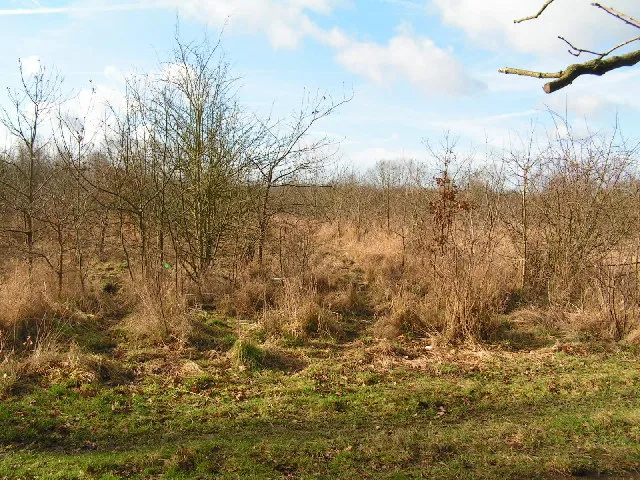
Photo: Nigel Chadwick, CC BY-SA 2.0, via Wikimedia Commons
The Trees That Refused the Memo
Behind a chain-link fence on the east side of Youngstown, Ohio, a row of apple trees leans over cracked pavement where a steel supplier once stored slag. No one has pruned them in decades. No one has watered them, fertilized them, or filed a permit on their behalf. Yet every September they hang heavy with fruit, some of it inevitably harvested by neighbors who never asked whether the ground beneath them was safe.
Scattered across Ohio, Pennsylvania, and Michigan, these so-called ghost orchards — plantings abandoned when mills, foundries, and factories closed — have quietly become one of the most instructive unscheduled experiments in American restoration ecology. They raise an uncomfortable question for an industry built on remediation budgets: what if some land heals better without us?
Reading the Root System Like an Archive
Dr. Lena Okafor, a soil microbiologist at a Michigan research station, has spent three seasons sampling the root zones of abandoned orchard trees in Saginaw and Flint. Her findings complicate the standard narrative of industrial ground as uniformly poisoned.
"An orchard is not a smelter yard," she notes. "These trees were planted on agricultural soil decades before the factories arrived, and their root systems run deep — well below the fill and surficial contamination that concerns us. In a sense, each tree is a living archive of what the ground used to be."
Her team's work on the trees' root microbiomes — the fungal and bacterial communities colonizing their feeder roots — has drawn attention from restoration ecologists nationwide. Arbuscular mycorrhizal fungi recovered from ghost orchard roots appear to tolerate, and in some cases sequester, elevated levels of lead and cadmium in surrounding soil. If those microbial associations can be cultured and transplanted, they could offer a low-cost biological toolkit for sites where conventional cleanup is financially impossible.
The logic is elegant: the survivors are the curriculum. Rather than engineering recovery from scratch, ecologists can study the organisms that already solved the problem.
The Forager's Dilemma
Not everyone sampling ghost orchard fruit is wearing a lab coat. In working-class neighborhoods throughout the Mahoning Valley and around Pittsburgh's former mill flats, foraging from abandoned trees is a longstanding tradition — one that predates any soil test.
Community groups in Youngstown and Detroit have begun partnering with extension offices to offer free testing of fruit from legacy trees. The results are genuinely mixed, and that nuance matters. Lead, the contaminant of greatest concern, moves poorly into tree fruit; studies consistently show pulp contamination far below levels found in leafy greens or root vegetables grown in the same soil. Apples and pears hanging on a tree are, statistically, among the safer things to eat from urban ground — provided they are washed, and provided the tree isn't rooted directly in slag or fill material.
But "statistically safer" is a hard message to deliver at a fence line. Public health officials walk a narrow line between encouraging productive use of urban fruit and avoiding liability. Some cities have responded by mapping legacy orchards and posting advisories; others have simply cut the trees down, a decision that foragers describe as erasing both a food resource and a piece of neighborhood history.
The Patience Argument
Here is where the observation becomes an opinion, and it is one this publication holds with open eyes: the ghost orchards suggest that not every compromised parcel requires a capital-S Solution. American reclamation policy is built on the premise that land is either remediated or abandoned — a binary that ignores the third option of simply waiting, protecting, and letting biological processes do slow work.
This is not an argument for neglect. It is an argument for triage. A fenced vacant lot with mature trees, established ground cover, and no immediate residential exposure may deliver more ecological value per dollar if it is left standing than if it is scraped, capped, and regraded. Every dollar not spent demolishing a functioning ecosystem is a dollar available for the parcels — schoolyards, gardens, housing sites — where active cleanup is genuinely non-negotiable.
Critics rightly point out the risks: passive approaches can embed inequity if poor neighborhoods are the ones asked to wait. Patience imposed on a community is abandonment; patience chosen by a community is stewardship. The distinction lies in who holds the deed, who gets the data, and who decides.
What the Ghosts Are Telling Us
Back in Youngstown, the apples behind the fence will drop unpicked this year, as they have for decades, feeding wasps, deer, and the soil itself. Researchers will return with augers and assays. Neighbors will return with bags.
The ghost orchards of the Rust Belt will not replace remediation science, and they should not be romanticized into an excuse for inaction. But they stand as quiet evidence that land written off as dead is often merely land written off too soon — and that the cheapest restoration tool available may be a fence, a soil test, and time.