The Provenance Premium: What It Really Costs to Grow the Right Seed for a Broken Landscape
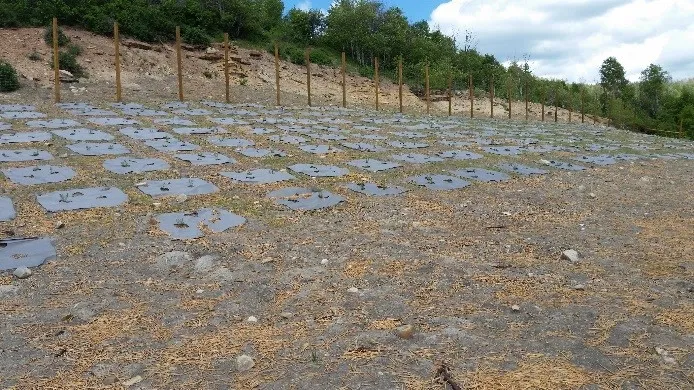
Photo: Intermountain Region US Forest Service, Public domain, via Wikimedia Commons
On a former coal haul road in central Appalachia, a reclamation plan sits ready: graded slopes, amended soil, a prescribed mix of little bluestem, poverty oatgrass, and partridge pea. The earthmoving contractor is under schedule. The seed is not. The mix calls for locally adapted ecotypes — plants grown from stock collected within a few dozen miles of the site — and the nearest nursery with that material in quantity is booked through the next growing season. The project waits, not on permits or funding, but on a supply chain measured in seasons rather than shipping days.
This is the quiet constraint beneath many of the country's restoration ambitions. As public agencies, nonprofits, and private developers commit to repairing mine lands, burn scars, and former industrial sites, the demand for native seed has outrun the capacity to produce it. The shortage is not simply a matter of volume. It is a problem of genetics, timing, and the way restoration work is contracted — and it is stalling projects that have already cleared their hardest hurdles.
A Supply Chain Measured in Seasons
Most native seed used in large-scale restoration is not harvested from the wild at scale. It is grown in agricultural fields, cleaned, tested, and stored — a process that resembles commodity farming but behaves nothing like it. A single perennial bunchgrass destined for a reclamation site may take two to four growing seasons to produce a reliable crop. Wildland collections, the foundation of local genetic stock, depend on weather, access, and the narrow window when a species sets viable seed. Nurseries that expand to meet demand must invest in land, irrigation, and specialized cleaning equipment years before a contract arrives.
Public programs have built pieces of this infrastructure. The Bureau of Land Management's Seeds of Success initiative trains crews to collect wild seed for conservation and research, and the USDA's Plant Materials Centers have long worked on selection and propagation. But these efforts were designed to support public lands and agricultural conservation, not to supply a nationwide restoration market. The result is a fragmented landscape of small nurseries, university plots, and agency collections that can meet local needs but struggle to scale.
The Provenance Problem
Restoration ecologists increasingly insist on local provenance — seed from populations adapted to the site's climate, soil, and disturbance history. The reasoning is practical. A cultivar bred for uniform germination in the Willamette Valley may fail on a drought-prone mine bench in the Intermountain West. A grass that thrives in a nursery row may lack the root architecture needed to hold a steep slope through a hundred-year storm. Local ecotypes are not a purist preference; they are an insurance policy against failure.
Yet provenance is exactly what the market struggles to deliver at scale. Collecting, testing, and maintaining genetically appropriate stock is labor-intensive and difficult to standardize. Seed certification systems exist, but they vary by state and species. Buyers often cannot verify a supplier's provenance claims without independent testing. And when projects are funded on short cycles, the cheapest compliant seed — often a broadly adapted cultivar — wins by default.
The Low-Bid Trap
Procurement rules compound the problem. Many public restoration contracts are awarded on low bid, with seed specified as a line item rather than a performance requirement. A contractor under pressure can substitute a generic mix that meets a species list but not the site's ecological needs. The savings are visible in the budget; the costs show up years later as failed establishment, erosion, and replanting.
Some agencies are experimenting with seed reserves, advance contracts, and qualification-based purchasing that rewards verified provenance. The Department of the Interior has explored native seed reserves for post-wildfire emergency stabilization, recognizing that waiting for the market to respond after a fire season is a recipe for bare ground and invasive spread. But these mechanisms remain exceptions. Most restoration spending still flows through contracts that treat seed as a commodity rather than a living supply chain.
Boom, Bust, and the Nursery That Cannot Wait
Native seed demand is volatile. A severe wildfire season or a federal reclamation initiative can send orders surging; a lapse in appropriations or a shift in priorities can leave nurseries holding unsold inventory. Perennial seed has a shelf life, and storage costs money. Growers who expand during a boom are exposed when the bust arrives. The result is a cycle familiar to anyone who has watched rural economies dependent on single industries: capacity appears when it is needed most, then disappears before the next crisis.
Some states and nonprofits are trying to smooth this cycle with multiyear purchasing agreements and regional seed cooperatives. The idea is to give growers a predictable floor of demand so they can invest in stock beds and equipment. It is not a subsidy for its own sake; it is an attempt to treat seed production as public infrastructure, the way the country treats highway materials or emergency fuel reserves.
What Scaling Would Take
Closing the gap will require more than a few new nurseries. It will require standardized provenance testing that buyers can trust, procurement rules that value genetic suitability alongside price, and funding streams that let growers plan beyond a single season. It will also require a cultural shift among restoration funders, who often measure success in acres planted rather than in the resilience of what grows there.
On the Appalachian haul road, the wait continues. The plan is sound, the ground is prepared, and the seed — when it arrives — will be the right seed for that slope. The question is whether the system that supplies it can learn to move at the speed of the land it is meant to heal.