Invisible Rivers: The Aquifers That Outlive Every Redevelopment Deadline
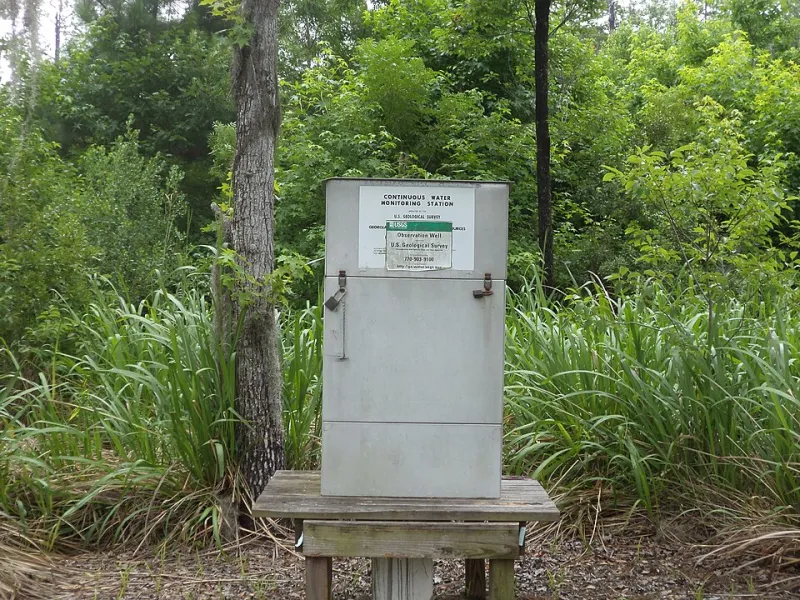
Photo: Michael Rivera, CC BY-SA 3.0, via Wikimedia Commons
Stand on the edge of a redeveloped industrial parcel in, say, Hamilton, Ohio, or Gary, Indiana, and the story the ground tells is a tidy one. Gravel paths. Native grasses. A plaque commemorating the steel mill or the plating works that once stood here. The site has been 'closed,' in the language of state environmental agencies, and closure is supposed to mean something.
Below your feet, though, another story is still being written. It has no landscaping and no ribbon-cutting, and it moves at the pace of inches per year.
The Two Clocks
Soil remediation operates on a schedule humans recognize: quarterly reports, five-year reviews, a target date for redevelopment financing. Groundwater contamination does not. Dissolved solvents and metals travel through aquifers according to geology — the grain size of sand, the fractures in shale, the slow pulse of recharge from rain — not according to bond closings or tax increment financing districts.
Hydrogeologists have a shorthand for the mismatch. A plume of trichloroethylene, a solvent once used ubiquitously by manufacturers across the Rust Belt, can persist for half a century or more in low-oxygen groundwater. Dense non-aqueous phase liquids — DNAPLs, in the trade — sink in thin fingers through the water table, dodging the very monitoring wells meant to intercept them. When a developer excavates and caps the soil, the plume underneath barely notices.
'You can have a site that passes every surface inspection,' one Great Lakes-region consultant puts it, 'and a mile down-gradient, somebody's municipal well is drinking the history of that property.'
What the Surface Doesn't Say
This is not an argument against reclaiming land. Sites left vacant and fenced for decades are their own form of harm — economic, social, and often environmental. The problem is narrower and more uncomfortable: visible restoration can become a convenient cover for invisible, ongoing contamination.
The pattern shows up repeatedly in state files. A former manufacturing parcel is remediated to industrial standards, sold, and reoccupied. Institutional controls — deed restrictions barring residential use or groundwater wells — are recorded and then effectively forgotten. Monitoring continues on paper, but the budget shrinks, the well network thins, and the responsible party may dissolve entirely. Five-year reviews become rubber stamps.
Meanwhile, the aquifer neither knows nor cares that the parcel above it changed hands.
Who Lives Down-Gradient
Groundwater does not respect parcel boundaries, and neither does the burden of its contamination. The neighborhoods most likely to sit down-gradient of a redeveloped site — often the same communities that hosted the original industry — are also the least likely to have private wells tested, or the political leverage to demand long-term monitoring.
Advocates in several Ohio and Michigan river towns have begun pushing back with a simple demand: monitoring obligations should be attached to the aquifer, not to the property deal. That means funding windows measured in generations, escrowed like mine reclamation bonds; it means public access to well data, not just agency summaries; and it means treating institutional controls as living commitments with actual enforcement, rather than a paragraph in a deed.
Some states are inching there. A handful of voluntary cleanup programs now require contingency plans if plumes migrate beyond predicted boundaries. Few, however, ask the harder question: who speaks for the aquifer when the developer is gone, the agency's caseload has tripled, and the only people still paying attention live on the next street over?
Reading the Water Before Believing the Ground
For residents, the practical guidance is unglamorous. Ask for the groundwater monitoring history of any reclaimed site near you — it is public record in most states. Look at flow direction, not just concentration numbers. Note whether the monitoring network sits entirely inside the property line, which is a bit like testing the air quality only in the smokestack's shadow.
Reclaimed land can be an honest achievement. But a restored surface is a claim about the present; an aquifer is a promise about the future. Until our cleanup timelines learn to run on water time, the greenest-looking sites in America may still be keeping their oldest secrets — quietly, downhill, and out of sight.