Nobody Budgets for Forever — and That's the Flaw in Every Reclamation Deal
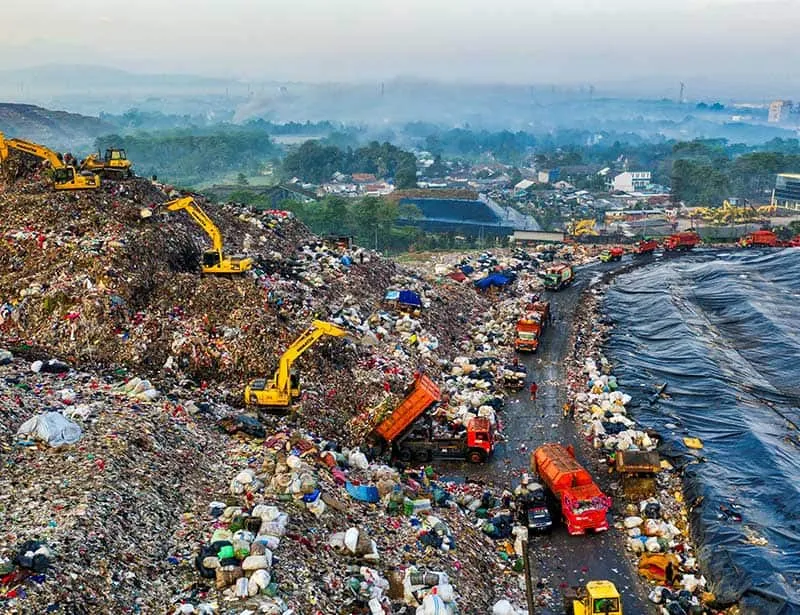
Photo: landfill cap grass field monitoring well maintenance, via www.trvst.world
There is a moment in every reclamation celebration that nobody photographs. The ribbon is cut, the grant check is acknowledged, the officials depart. And somewhere in a file cabinet, a maintenance schedule quietly begins its thirty-year run: mow the vegetative cap twice a season, inspect the drainage swales after major storms, sample the monitoring wells every quarter, repair the fence that keeps people off the gas vents.
This is the afterlife of every reclaimed site, and it is the part of the story we consistently refuse to fund honestly.
The Myth of 'Done'
American remediation culture is built around completion. A site is cleaned, a certificate is issued, the project appears in a report as a success. But a cap is not a cure — it is a promise that requires upkeep. Geomembranes degrade under ultraviolet light. Buried waste settles, creating low spots where water ponds. Trees root into cover soil. Frost heaves the edges of monitoring wells.
None of this is a failure of engineering. It is the predictable physics of burying something and asking the ground above it to stay put for a century. Yet our funding models — one-time grants, capital appropriations, settlement payments — are structured as if restoration had an ending.
What Happens When the Money Runs Out
The pattern is familiar to anyone who works in this field. A capped municipal landfill is maintained diligently for a decade by the county public works department. Then budgets tighten. Mowing becomes annual instead of twice-yearly. The groundwater sampling contract lapses 'temporarily.' Nobody notices a failing gas vent until a homeowner three parcels over smells something wrong.
The communities left holding these obligations are not random. Sites clustered in low-income neighborhoods and communities of color — the same places that hosted the original landfills and factories — are precisely the places where the fiscal capacity for ongoing stewardship is thinnest. This is an environmental justice problem hiding inside a budgeting problem.
A Better Model Already Exists
Some states have shown the way. Trust fund mechanisms — funded at closure through per-acre assessments or escrow requirements — set aside dedicated money for post-closure care, managed by an agency with statutory authority to spend it on maintenance regardless of local budget cycles. Mining reclamation programs have operated perpetual trust funds for decades, and the model translates cleanly to solid waste and brownfield contexts.
The principle is simple: if a project requires eternal maintenance to remain safe, the money for that maintenance should be secured before the project is declared a success. A modest endowment — often less than ten percent of remediation capital costs — fully funds the mowing, the sampling, and the repairs in perpetuity.
Making Forever a Condition of Approval
Regulators, philanthropies, and developers all have leverage here. State environmental agencies should condition closure approvals on a funded perpetual-care mechanism, not merely a maintenance plan. Grantmakers should treat endowment requests as legitimate — even essential — components of restoration budgets, rather than overhead to be minimized. And developers who profit from cleaned land should accept that a share of that value belongs to the decades of vigilance their project makes necessary.
A reclaimed site is a covenant between the present and every future generation that lives on the land. Covenants deserve endowments. Anything less is not restoration — it is a deferred cost, quietly billed to the neighborhood.