The Lake After the Last Load: Governing Gravel Pit Pools as Public Assets
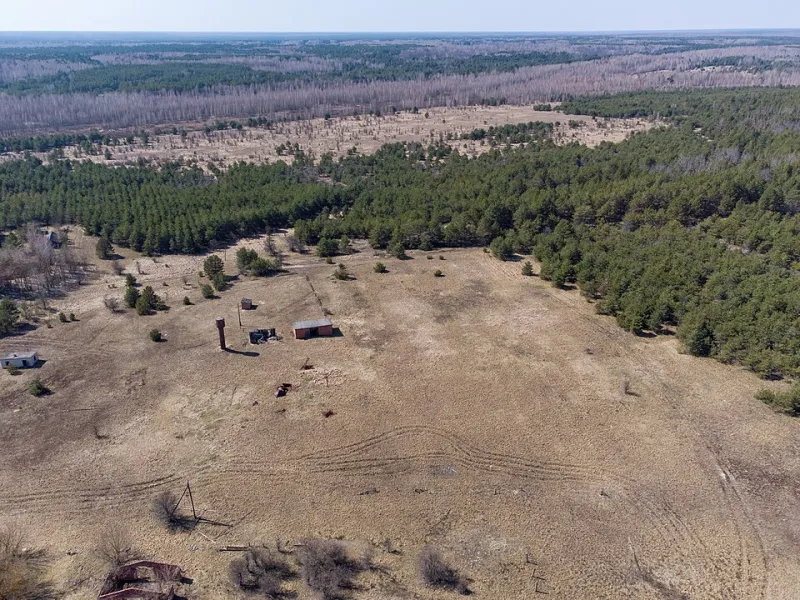
Photo: Budgawl, CC0, via Wikimedia Commons
A gravel pit does not become a lake by accident alone. It becomes one because a permit allowed excavation below the water table, because dewatering stopped when the mine closed, and because no one required a different final shape for the land. The water arrives on its own. The public consequences do not.
Across the United States, exhausted sand and gravel pits are among the most common post-mining landscapes. They supply aggregate for roads, concrete, and foundations, and they are often located near the communities they serve. When digging ends, many pits are backfilled, graded, and revegetated. Others are left as open basins that intercept groundwater or collect stormwater. Over years or decades, those basins can become pit lakes: cold, deep, sometimes clear, sometimes chemically suspect, and almost always controversial.
An Accidental Lake Is Still a Design Decision
Pit lakes form when excavation extends below the local water table and pumping ceases. Groundwater flows in, and surface water may add to the basin. The resulting lake is not a natural feature with a natural history. It is a engineered void responding to hydrology. Its depth, shoreline slope, water chemistry, and connection to nearby aquifers all reflect the mining plan and the closure plan, whether or not anyone intended those outcomes.
That distinction matters for reclamation policy. A pit lake can be a community asset: a fishing pond, a wildlife area, a recharge feature, or a buffer between development and a river. It can also be a hazard with steep banks, cold water, unstable sediment, and no safe public access. It can be a chronic monitoring obligation if the water becomes acidic or mobilizes metals. The same basic landform can become any of these things depending on how the site was designed and how it is governed after the last load leaves.
The Regulatory Patchwork
There is no single national standard for pit-lake reclamation. Oversight is divided among state mining agencies, local zoning authorities, environmental regulators, and sometimes federal programs when surface waters or wetlands are involved. Some states require a closure plan that addresses final lakes, including shoreline grading, safety, and water-quality monitoring. Others focus on backfilling, revegetation, and bond release, leaving the water body as a residual feature to be managed by whoever owns the land.
Bonding is the central financial tool. A permittee posts a bond or other financial assurance to cover reclamation if the company walks away. But bonds are often calibrated to known closure tasks, not to decades of water testing or perpetual public safety management. If a pit lake develops poor chemistry after bond release, the responsible party may be gone, and the local government may inherit a problem it never priced.
As of 2026, several states are revisiting these rules as aggregate demand continues and as communities press for clearer answers about what happens when a nearby pit stops producing. The debate is not anti-mining. It is about making the closure phase as deliberate as the extraction phase.
What the Water Knows
Pit-lake chemistry depends on geology, groundwater, climate, and the materials left in and around the basin. Excavation can expose sulfide-bearing rock or fine sediments that generate acidity when oxygen and water arrive. Alkaline geology can neutralize some of that acidity; in other settings, metals such as arsenic, selenium, or iron may become more mobile. Evaporation in dry regions can concentrate salts. In wet regions, flushing may improve or worsen conditions depending on the source water.
Testing is therefore site-specific and long-term. A single sample at closure is not enough. Regulators need a baseline before flooding, a monitoring plan during filling, and a commitment to track trends in pH, metals, nutrients, and groundwater levels. They also need to know who will pay for that monitoring and what thresholds would trigger intervention. Without those answers, a pit lake becomes a question deferred rather than a reclamation completed.
Safety, Access, and the Public Interest
Pit lakes are often close to roads, subdivisions, and schools. Their banks can be steep and unstable. Water may be deeper and colder than nearby natural ponds. There may be no lifeguards, no parking, and no lawful access, yet the site may attract anglers, swimmers, and off-road vehicles. Fencing can reduce immediate risk, but a fence is not a reclamation strategy. It is a boundary around an unresolved land-use question.
Some communities have pushed for public access: boat ramps, trails, fishing piers, and shoreline restoration. Others have pushed for closure and isolation. Both positions can be reasonable depending on the site. The key is that the decision should be made through a public process, with water-quality data available, before the lake becomes an established fact that residents must live beside.
Designing for Benefit Instead of Liability
Pit lakes can be designed for public benefit without pretending they are natural lakes. That means shaping shorelines to stable slopes, creating shallow littoral zones for habitat, separating clean fill from reactive spoil, and planning access points that match actual demand. It means consulting fish and wildlife agencies early, not after the pit has filled. It also means writing a monitoring and maintenance plan with a dedicated funding source, so that public benefit does not become an unfunded mandate.
The most important design decision may be timing. If closure is considered only at the end of mining, options are limited by the hole that already exists. If reclamation is integrated into the extraction plan, the operator can leave a basin that is safer, more predictable, and more useful. That approach does not eliminate risk. It makes risk visible and assignable.
Reclaimed land is not only solid ground. Sometimes it is water. A gravel pit lake can be a fishery, a hazard, a wildlife refuge, or a financial orphan. Which one it becomes is not determined by the last shovel of gravel. It is determined by the permits, plans, and public decisions that follow.