Pipes Without a Paymaster: The Utilities Left Behind When the Mine Closes
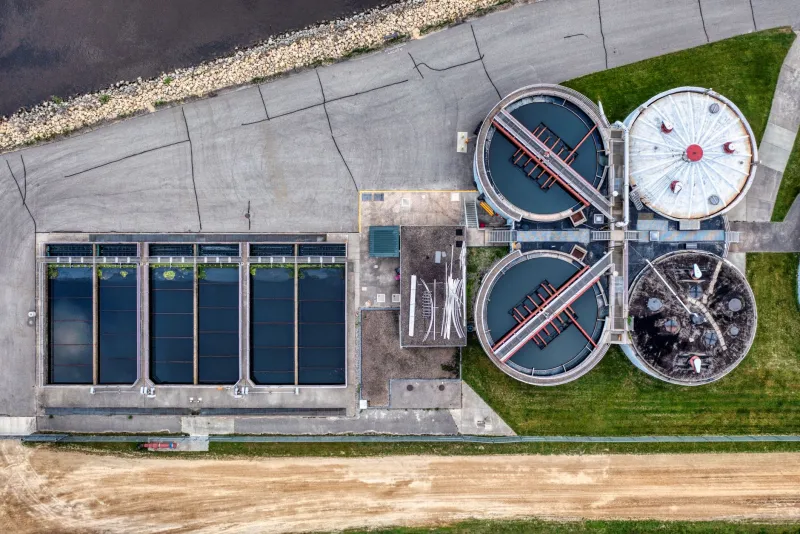
The water treatment plant in the town of Mabscott's neighbor — a small southern West Virginia community we'll call Cedar Hollow for the residents who asked not to draw further attention to their situation — was designed in 1968 to serve a population of 3,400. Today, roughly 620 people remain. The plant still runs. It runs because a handful of local men, some of whom once worked for the coal company that built it, have kept it running on a budget that would not cover a month of chemical supplies in a functioning municipality.
When the operator filed for bankruptcy in 2019 and transferred its remaining surface holdings to a holding company, the town's water system — like its roads, its sewage lagoons, and its storm drains — transferred to no one. Ownership, legally speaking, simply evaporated.
The Infrastructure Nobody Reclaims
Federal and state reclamation programs are built around visible scars: highwalls, refuse piles, acid mine drainage seeping from abandoned portals. The Abandoned Mine Land fund, administered through the Office of Surface Mining Reclamation and Enforcement, has done genuine work capping gob piles and sealing shafts across Appalachia. But nowhere in the standard reclamation checklist does a water treatment plant appear. Neither does a distribution main, a lift station, or the paved road connecting the last forty houses to a state route.
This is a category error with real consequences. A community is not just dirt. When the land is cleaned but the utilities underneath it fail, residents face a choice that no reclamation statute anticipated: pay water rates calculated for a customer base ten times the town's current size, or drink from a system drifting toward state health department intervention.
What a Takeover Actually Costs
State infrastructure takeover programs exist in several coal states, and West Virginia's is among the more active. The state can assume operation of orphaned systems, fold them into regional public service districts, and amortize repairs across a wider rate base. On paper, it is a sensible mechanism. In practice, the queue is long.
Cedar Hollow's system was assessed by a state engineer in 2022. The verdict: the plant needed $4.1 million in upgrades to meet discharge permits, and the distribution lines — some of them original to the company's construction — leaked an estimated 45 percent of treated water before it reached a tap. Total cost to bring the system to modern standards: north of $9 million. The town's entire annual budget, collected mostly through a utility fee the company once paid on residents' behalf, is under $200,000.
Federal grants could close that gap. The Infrastructure Investment and Jobs Act sent unprecedented sums toward water systems, and EPA's Drinking Water State Revolving Fund offers principal forgiveness for disadvantaged communities. But the application process assumes an applicant with engineering staff, matching funds, and the administrative capacity to manage federal reporting. A town of 620 people, most of them retired, has none of these. The grant gap is not primarily a money gap. It is a capacity gap.
The Regional Answer, and Its Limits
The solution most states converge on is consolidation: fold failing systems into a regional utility with a real rate base. It works where geography cooperates. In hollow country, where each community sits at the end of a winding road and a separate watershed, consolidation can mean miles of new transmission line — expensive to build, expensive to maintain, and prone to the same freeze-thaw failures that plague the existing lines.
There is also a question of fairness that regionalization papers over. Residents of Cedar Hollow did not choose their water system; it came with the houses their grandfathers rented from the coal company. When the company left, it took the profits and left the pipes. Asking those remaining residents to shoulder even reduced rates for infrastructure designed to serve an extractive enterprise that paid no local taxes for decades is, at minimum, an argument worth having in public.
Redefining What Reclamation Means
The environmental justice framing here is unavoidable. Communities that hosted extraction — that breathed the dust, watched the streams run orange, and sent their sons underground — are now being asked to fund the basic utilities of modern life on fixed incomes because the legal architecture of reclamation never counted their water mains as part of the damage.
A more complete definition of reclamation would include the horizontal infrastructure: the systems that make cleaned land habitable. Some states are moving this direction. A handful of AML grant set-asides now permit economic and community development uses, and pilot programs in Kentucky and West Virginia have directed funds toward water line replacement on formerly company-owned land. These are exceptions. They should be the rule.
Until the statute books catch up, towns like Cedar Hollow will keep doing what they have always done: improvising, patching, and holding together the physical remnants of an industry that has moved on. The land can be reclaimed. Whether the community on top of it survives depends on deciding, finally, that the pipes count too.